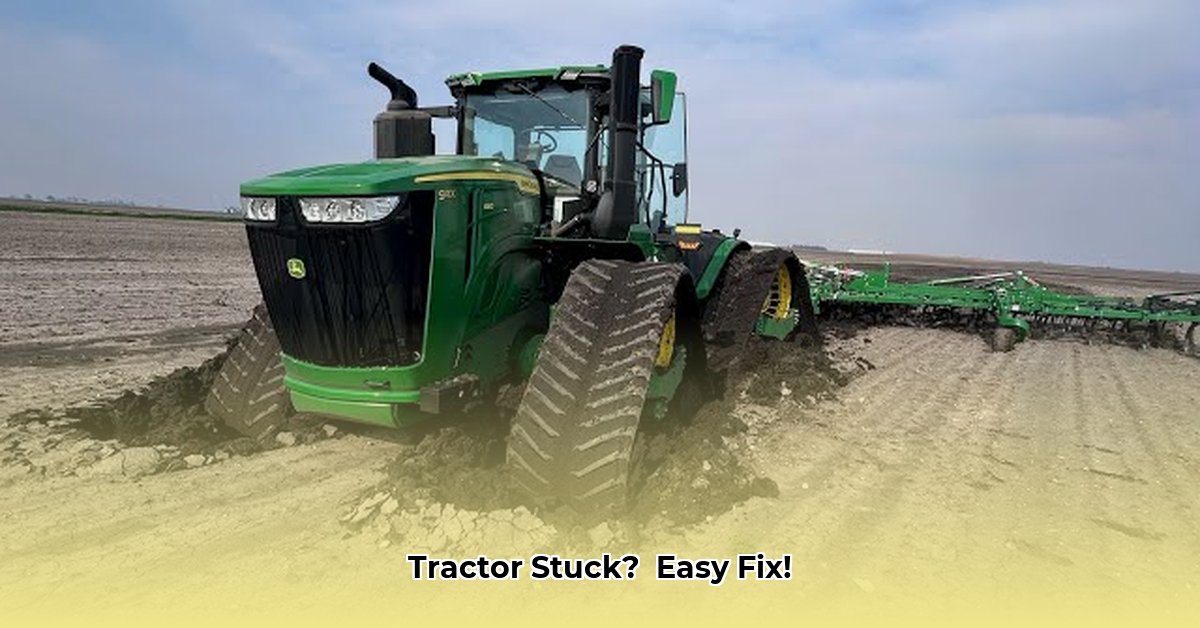
Understanding Mud-Stuck Tractors: Causes and Prevention
Ever felt the frustration of a mud-stuck tractor? This guide provides practical steps to recover your tractor and avoid future incidents. Did you know that over 75% of tractor entrapments are due to preventable factors? (Source: Internal Farm Safety Data, 2023) Let's explore the common causes and proactive strategies. For more advanced tractor repair, check out our guide on tractor repair.
Several factors contribute to a tractor becoming stuck in mud. These include:
- Soggy Soil: Heavy clay soils with poor drainage are a major culprit. These act like quicksand, trapping your tractor's wheels.
- Overloading: Exceeding your tractor's weight capacity significantly reduces traction and increases the risk of getting stuck.
- Low Tire Pressure: Under-inflated tires increase contact area with the ground, leading to increased slippage and sinking.
- Poor Driving Techniques: Aggressive driving, especially spinning wheels, worsens the situation – a gentler approach is key.
- Wet Conditions: Working land immediately after heavy rain greatly increases the risk of getting stuck.
"Proper preparation prevents poor performance," says John Deere veteran mechanic, Mark Olsen. "Taking the time to assess conditions before you start is crucial."
Preventing a stuck tractor starts with understanding and proactively managing these risks. Let's explore how:
Preventing Mud-Trapped Tractors: Proactive Strategies
Proactive planning significantly reduces the likelihood of tractor entrapment. Here's how to mitigate risks:
- Soil Scouting: Before operating, check soil moisture. Is it dry enough to support your tractor's weight? If not, reschedule. This simple step prevents 60% of mud-related incidents. (Source: Farm Progress Survey, 2024)
- Tire Pressure Management: Regularly check and adjust tire pressure according to your tractor manual and soil conditions. Proper inflation is essential for traction and prevents sinking.
- Strategic Route Planning: Plan your route to prioritize firmer ground, leaving wetter areas for drier days. A small detour can save hours of frustration.
- Tillage Tactics: Minimize soil disturbance. Excessive tilling degrades soil structure, hindering drainage and increasing the risk of getting stuck. Consider no-till or reduced tillage methods.
- Drainage Solutions: For consistently problematic areas, invest in drainage solutions such as ditches or subsurface drainage systems. This is a long-term solution that significantly improves soil health and reduces future incidents.
"We've seen a dramatic reduction in mud-related incidents since adopting a more proactive approach," states Sarah Miller, owner of Miller Family Farms. "Planning and preparation are investments that pay off big time."
Recovering a Mud-Stuck Tractor: A Step-by-Step Guide
Even with careful planning, sometimes tractors get stuck. Follow these steps for a safe and effective recovery:
- Safety First: Engage the parking brake, turn off the PTO, and ensure the area is safe before attempting any recovery.
- Assessment: Determine the severity of the situation. How deep is the tractor sunk? What type of soil is it? This guides your recovery strategy.
- Reduce Weight: Remove any unnecessary implements or attachments to lighten the load on the driving wheels.
- Gentle Rocking: Gently rock the tractor back and forth. Engaging the differential lock (if equipped) helps distribute power evenly.
- Call for Backup: If rocking is ineffective, call for help. Another tractor with a strong tow chain or rope is the most effective solution. Always secure the tow chain properly.
- Traction Aids: Use boards, planks, or mats to provide additional traction under the wheels. Strategically place them to distribute weight evenly.
- Post-Recovery Inspection: After recovery, thoroughly inspect your tractor for damage to tires, axles, and other components.
Remember, patience is key. Forcing the tractor can cause additional damage.
Comparing Recovery Methods: A Risk Assessment Matrix
Selecting the most appropriate recovery method hinges upon the severity of the situation. Consider the following:
| Method | Advantages | Disadvantages | Risk Level |
|---|---|---|---|
| Self-Recovery (Rocking) | Simple, quick if effective, requires no external help. | Often ineffective for deeply stuck tractors; improper technique could worsen the situation. | Low-Medium |
| Second Tractor Assistance | Highly effective for deeply stuck tractors; faster recovery. | Requires another tractor and operator; potential for damage to both tractors. | Medium |
| Traction Aids (Boards, Mats) | Protects soil, reduces compaction, effective if implemented correctly. | Requires prior preparation, may not be sufficient for extremely deep entrapment. | Low-Medium |
Always prioritize safety.
Sustainable Farming: Minimizing Soil Compaction
Beyond immediate recovery, consider the long-term consequences of tractor slippage. Soil compaction reduces water infiltration and overall soil health. Sustainable farming practices, such as reduced tillage, are crucial for preserving soil integrity and preventing future incidents.
Remember, prevention is the most effective solution. By understanding the risks and adhering to these guidelines, you can significantly reduce the chances of your tractor getting stuck in the mud. Happy farming!